
Tandem Gear Pump Manufacturer & Supplier
Engineered dual-section external gear pumps delivering independent hydraulic flow from a single motor drive shaft. Optimize machine footprint, simplify electrical panels, and power hi-lo press circuits or secondary automation stages with zero flow cross-talk.
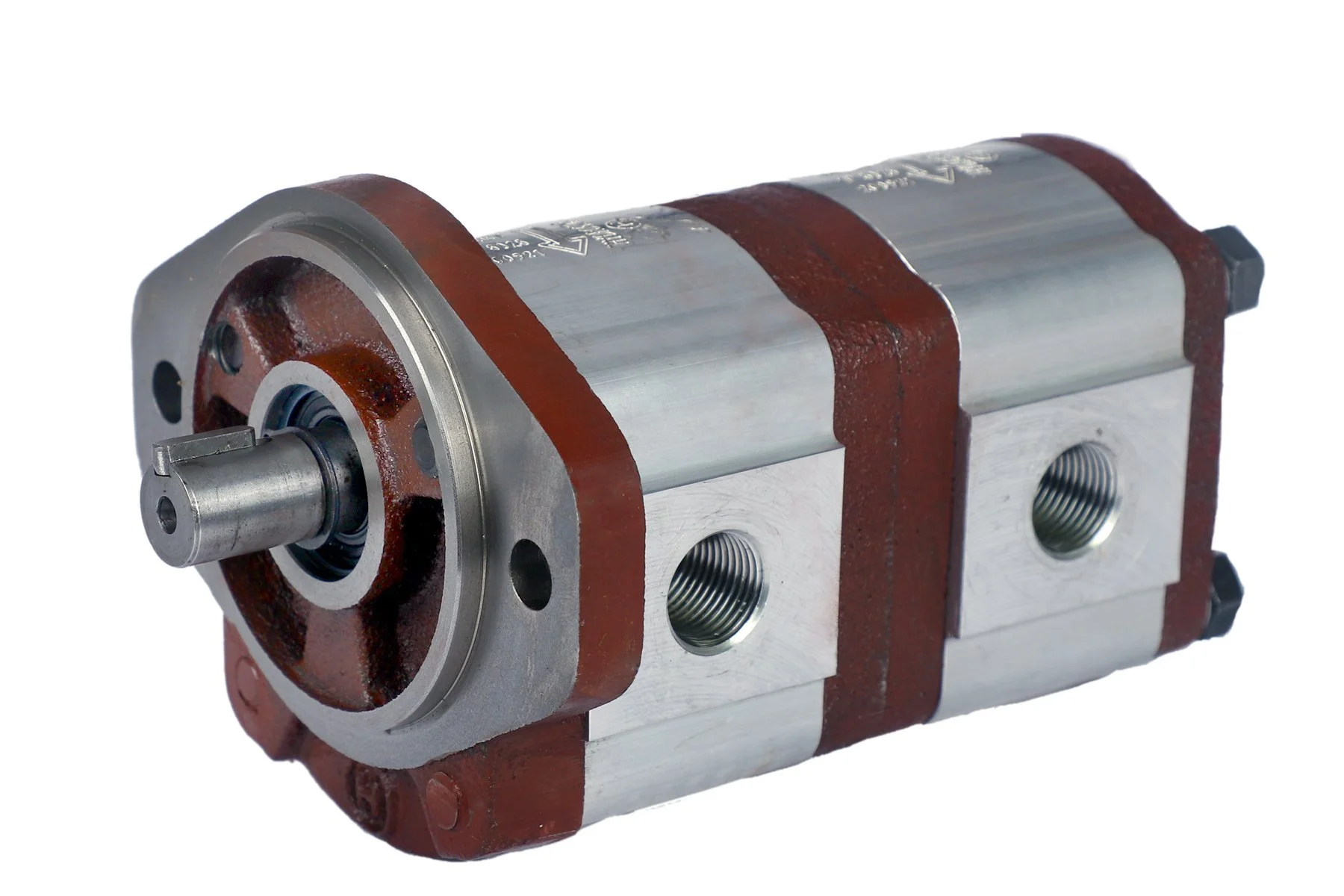
What Is a Tandem Hydraulic Gear Pump?
A tandem gear pump (also termed a double gear pump or multi-stage gear pump) consists of two or more distinct gear pump assemblies mechanically coupled end-to-end along a single shared drive shaft. While driven by a single prime mover—such as a 3-phase electric motor or diesel engine—each pump section features its own dedicated suction inlet and pressure delivery port.
This modular architecture allows mechanical engineers to power two completely isolated hydraulic circuits simultaneously at different flow rates and working pressures without requiring multiple motors, complex belt drives, or dual pump-motor bell housings. In high-low hydraulic press machines, for example, the primary high-displacement pump section provides rapid cylinder extension at low pressure, while the secondary smaller-displacement section delivers high-pressure clamping force once the die makes contact.
At Honeywell Hydraulics, we engineer and assemble heavy-duty tandem gear pumps in flexible frame-size combinations (Group 2+Group 1, Group 2+Group 2, Group 3+Group 2) tailored to OEM specifications. Every pump features hardened alloy steel gears, self-lubricating PTFE composite bushings, high-pressure Viton/NBR shaft seals, and undergoes comprehensive 100% bench testing before dispatch from our Ahmedabad facility.
Engineered Advantages of Tandem Gear Pumps
Designed to reduce machine space requirements, eliminate extra motor purchases, and deliver dual-stage hydraulic flexibility.
Single-Shaft Dual Power Delivery
Powers two completely separate fluid circuits from one motor, eliminating the need for a secondary electric motor, starter contactor, and redundant electrical cabling.
Zero Hydraulic Cross-Talk
Internal isolation seals and heavy-duty intermediate intermediate bearing plates completely separate fluid chambers, allowing differing operating pressures and flows without pressure bleed.
Custom Displacement Matching
Pair a large displacement primary stage (up to 60 cc/rev) with a precision metering secondary stage (1.2 to 20 cc/rev) to match your exact cycle-time equations.
Heavy-Duty Bearing Support
Equipped with high-load DU composite bushings designed to absorb radial and axial shaft deflection under continuous 250 Bar duty cycles.
Flexible Inlet Routing Options
Available with either isolated separate suction ports for independent reservoirs, or a common shared suction manifold for compact single-tank installations.
High-Low Unloading Valve Integration
Ideal pairing with our custom hydraulic manifold blocks for automated pilot-operated unloading circuits on hydraulic baling and compression presses.
Technical Specifications
Standard industrial tandem combinations for Group 2 and Group 3 gear pump configurations. Custom ratios can be configured on request.
Tandem Gear Pump Performance & Dimensional Specifications
| Parameter | Value |
|---|---|
| Configuration Type | Double / Tandem Positive Displacement External Gear Pump |
| Standard Frame Group Combinations | Group 2 + Group 1, Group 2 + Group 2, Group 3 + Group 2 |
| Front Stage Displacement (P1) | 4.0 to 30.0 cc/rev (Group 2) | 20.0 to 60.0 cc/rev (Group 3) |
| Rear Stage Displacement (P2) | 1.2 to 8.0 cc/rev (Group 1) | 4.0 to 25.0 cc/rev (Group 2) |
| Rated Continuous Working Pressure | 180 to 250 Bar (stage-dependent) |
| Peak Intermittent Pressure | Up to 280 Bar |
| Standard Rated Speed | 1,440 RPM (50 Hz 4-pole AC motor) | Speed range: 600–3,000 RPM |
| Mounting Flange Standards | European 4-bolt rectangular, SAE A 2-bolt, SAE B 2-bolt |
| Shaft End Profiles | 1:8 Taper with Woodruff key, Parallel Keyed Ø19.05 / Ø22.2 mm, SAE Splined |
| Suction & Discharge Ports | BSPP female threads or SAE 4-bolt split flange |
| Fluid Operating Temperature | -15°C to +80°C with standard NBR seals (Viton seals up to 120°C) |
| Recommended Fluid Viscosity | 20 to 100 cSt (optimum operating range) |
Available Tandem Pump Configurations
Select the physical combination that best balances cycle speed, working tonnage, and available motor kilowatt power.
Group 2 + Group 1 Combination
High-speed main flow paired with micro-metered pilot or auxiliary control flow. Ideal for compact industrial automation cells.
- Main Stage: 6–25 cc/rev | Aux Stage: 1.2–6 cc/rev
- Pressures up to 250 Bar (P1) and 230 Bar (P2)
- Extremely compact overall envelope length
Group 2 + Group 2 Combination
Dual balanced industrial circuits for machine tools, twin-cylinder synchronized presses, and plastic molding core pulls.
- Both stages configurable up to 30 cc/rev
- Continuous 210–250 Bar operational rating
- Available with common or separated suction ports
Group 3 + Group 2 High-Low Combination
The benchmark heavy-tonnage press circuit configuration. High-flow low-pressure fast descent transitioning to low-flow high-pressure squeeze.
- Main Stage up to 60 cc/rev for rapid approach
- Rear Stage for maximum clamping force up to 250 Bar
- Substantially reduces electric motor HP requirements
Where Tandem Gear Pumps Are Deployed
Providing dual-stage reliability across India’s core manufacturing and processing sectors.
Hydraulic Press & Baling Machinery
Essential prime mover for scrap metal balers, deep-draw hydraulic presses, and rubber molding machines needing rapid approach and high-pressure hold.
Plastic Processing & Extrusion Lines
Simultaneously powering primary mold clamping rams and secondary ejector or screw motor operations from a single electric drive.
Construction & Earthmoving Attachments
Supplying independent hydraulic circuits for vehicle steering and auxiliary boom or grapple cylinder actuation.
Special Purpose Machine (SPM) Builders
Compact modular integration inside custom CNC fixtures, clamping tables, and rotary transfer machines.
Engineering & Selection Considerations for Tandem Pumps
Shaft Torque LimitsCalculating Total Input Shaft Torque Capacity
The front drive shaft must transmit the combined torque of BOTH stages simultaneously. We verify that (P1 × V1 + P2 × V2) does not exceed the mechanical yield strength of the input shaft and coupling.
Motor Power SizingElectric Motor Kilowatt Sizing in Hi-Lo Circuits
In high-low press circuits where an unloading valve dumps the high-flow stage back to tank during high-pressure clamping, the motor only needs to be sized for the clamping stage plus minimal idling backpressure, saving up to 50% in motor kW.
Inlet Cavitation GuardProper Suction Line Sizing for Dual Pump Stages
When two pump stages draw from a shared suction manifold, the suction pipe diameter must maintain fluid velocity below 1.0 m/s to prevent localized cavitation, gear tooth pitting, and acoustic whine.
Complementary Hydraulic System Equipment
Seamlessly connect your tandem gear pump with our precision-engineered cylinders, manifold blocks, and filtration accessories.
Browse all products →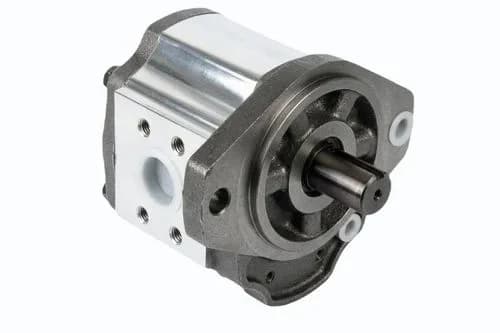
Hydraulic Gear Pumps (Single Stage)
Single-section positive displacement gear pumps for standard power packs and industrial machinery.
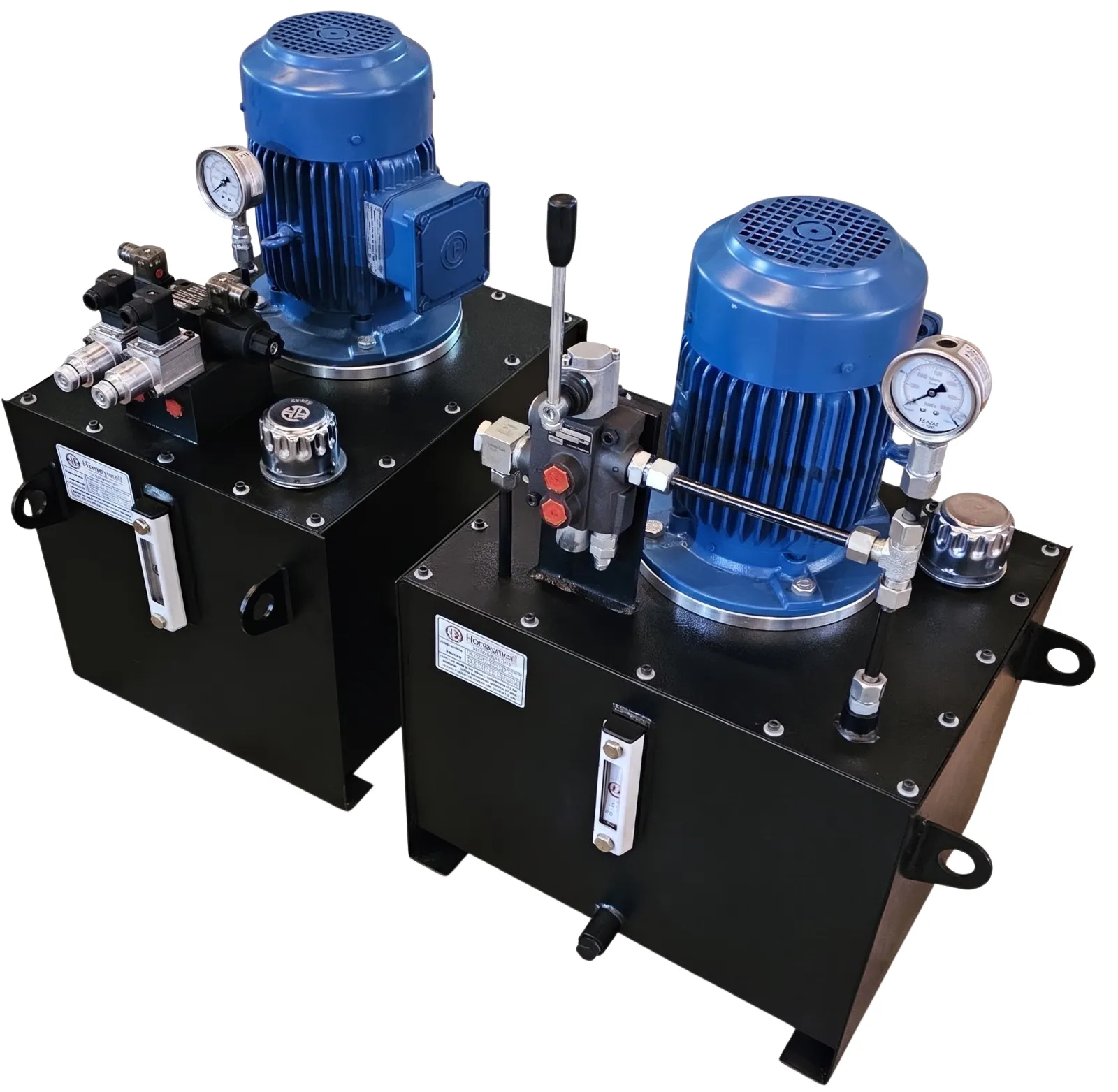
Hydraulic Power Packs
Fully pre-assembled 3-phase and high-low hydraulic power units built with matched pumps and valves.
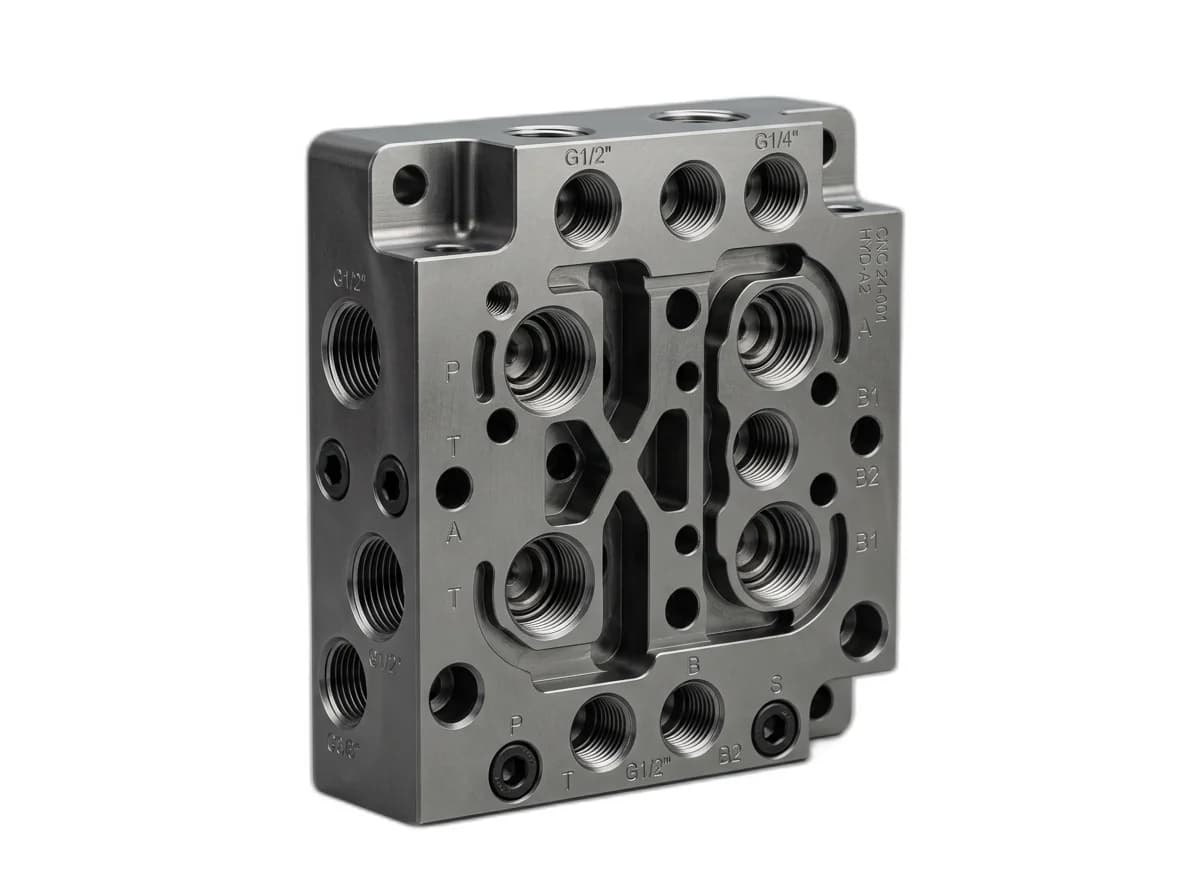
Custom Hydraulic Manifold Blocks
CNC-machined logic manifolds with integrated high-low unloading valves for seamless tandem circuit control.
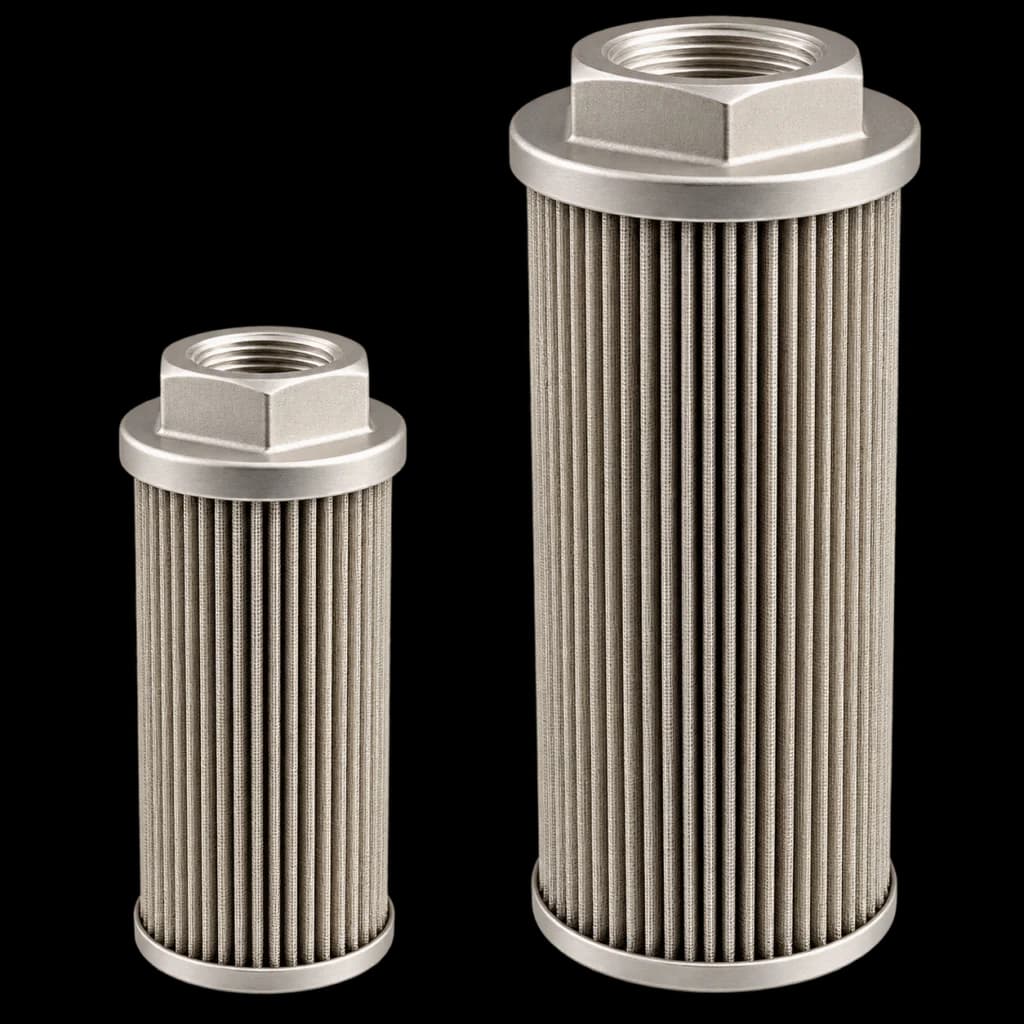
Suction Strainers
Stainless steel wire mesh intake filters protecting tandem pump gears from reservoir particulates.
Proven Performance on the Factory Floor
Read direct feedback from plant managers, machine builders, and OEM procurement teams across India who run Honeywell Tandem Hydraulic Gear Pump in high-duty operations.
“The tandem gear pump provided smooth dual-circuit flow for our automated compression press. Zero internal leakage between stages even under continuous 210 bar load.”
Mr Ketan Patel
Chief Technical Officer, Creative Automation
Order feedback: 2026-09-12
“Consolidated two separate pumps into a single tandem unit. Cut our electric motor requirement by 40% and saved valuable space on the power pack reservoir.”
Mr Vivek Jadav
Head of Engineering, Mechtech Engineering Co.
Order feedback: 2026-10-04
Frequently Asked Questions
Find answers to common questions about our custom hydraulic cylinder manufacturing process and capabilities.
Still have questions?
Our engineering team is ready to discuss your specific hydraulic requirements.
Ready to Configure a Custom Tandem Gear Pump for Your Machine?
Consult with Honeywell Hydraulics engineering team in Ahmedabad. We match exact stage displacements, verify shaft torque limits, and supply factory-tested tandem units with prompt turnaround across India.